What ocean temperature will allow for a strong (stronger than a Category 3) hurricane to develop?
Warmer Seas Creating Stronger Hurricanes, Written report Confirms

A rising in the world's bounding main surface temperatures was the primary contributor to the formation of stronger hurricanes since 1970, a new study reports.
While the question of what role, if whatever, humans have had in all this is withal a matter of intense fence, virtually scientists concord that stronger storms are probable to be the norm in time to come hurricane seasons.
The study is detailed in the March 17 issue of the periodical Science.
An alarming trend
In the 1970s, the average number of intense Category iv and 5 hurricanes occurring globally was about 10 per year. Since 1990, that number has most doubled, averaging about 18 a twelvemonth.
Category 4 hurricanes have sustained winds from 131 to 155 mph. Category 5 systems, such as Hurricane Katrina at its top, feature winds of 156 mph or more. Wilma last year set up a record as the well-nigh intense hurricane on record with winds of 175 mph.
While some scientists believe this trend is but part of natural ocean and atmospheric cycles, others fence that rising sea surface temperatures as a side effect of global warming is the primary culprit.
According to this scenario, warming temperatures heat up the surface of the oceans, increasing evaporation and putting more water vapor into the atmosphere. This in turn provides added fuel for storms equally they travel over open up oceans.
Other factors less important
The researchers used statistical models and techniques from a field of mathematics called information theory to determine factors contributing to hurricane strength from 1970 to 2004 in vi of the globe'south ocean basins, including the North Atlantic, Pacific and Indian oceans.
They looked at four factors that are known to affect hurricane intensity:
- Humidity in the troposphere—the part of the temper stretching from surface of the Earth to near 6 miles up
- Wind shear that can throttle storm germination
- Rising bounding main-surface temperatures
- Large-scale air circulation patterns known as "zonal stretching deformations"
Of these factors, but ascent ocean surface temperatures was found to influence hurricane intensity in a statistically significant way over a long-term ground. The other factors afflicted hurricane activity on curt time scales only.
"We found no long-term trend in things like wind shear," said report team member Judith Curry of the Georgia Institute of Applied science. "There's a lot of twelvemonth to twelvemonth variability only there's no global trend. In whatever given twelvemonth, it's dissimilar for each ocean."
An answer for the critics
The new report potentially addresses one major criticism leveled past scientists skeptical of whatever strong link betwixt sea surface temperatures and hurricane strength, said Kerry Emanuel, a climatologist at the Massachusetts Plant of Engineering science who was not involved in the study.
Last year, Emanuel published a study correlating the documented increase in hurricane duration and intensity in the Atlantic and Pacific oceans since the 1970s to rises in sea surface temperatures over the same time menstruum.
"Nosotros were criticized past the seasonal forecasters for not including the other environmental factors, like wind shear, in our analysis," Emanuel said in an email. "[We didn't practice so] because on time scales longer than 2-iii years, these do not seem to matter very much. This newspaper more or less proves this point."
Kevin Trenberth, the head of climate assay at the National Center for Atmospheric Research (NCAR), believes the new report's main finding is authentic but thinks the effects of some of the environmental factors on hurricane intensity might accept been underestimated.
"The reason is they're covering a flow from 1970 to 2004. 1979 is the twelvemonth when satellites were introduced into the [NCEP/NCAR] Reanalysis. The quality of the analysis prior to 1979 is but nowhere near as skilful," said Trenberth, who also was non involved in the study.
The NCEP/NCAR Reanalysis is the database the researchers drew upon for information about the effects of troposphere humidity, wind shear and zonal stretching deformation on hurricane intensity; sea surface temperature data came from a unlike database.
Back-scratch best-selling that reanalysis data prior to 1979 is of slightly lower quality than more recent data but believes this doesn't substantially change the written report's main finding. Trenberth agreed: "I suspect they may well have gotten the right reply anyhow," he told LiveScience.
Natural cycles?
Some scientists take explained the rise strength of hurricanes as existence part of natural weather cycles in the earth'south oceans.
In the Due north Atlantic, this wheel is called the Atlantic multi-decadal mode. Every xx to forty years, Atlantic Ocean and atmospheric weather condition conspire to produce just the right conditions to cause increased storm and hurricane activity.
The Atlantic Ocean is currently going through an agile catamenia of hurricane action that began in 1995 and which has connected to the present. The previous active cycle lasted from the tardily 1920'due south to 1970, and peaked around 1950.
These cycles definitely do influence hurricane intensity, just they can't be the whole story, Curry said.
While scientists expect stronger hurricanes based on natural cycles alone, the researchers suspect other contributing factors, since current hurricanes are even stronger than natural cycles predict.
"Nosotros're not even at the top of current cycle, we're simply halfway up and already nosotros're seeing activity in the North Atlantic that'due south 50 percent worse than what we saw during the last tiptop in 1950," Curry said.
Some scientists still recollect information technology's also premature to make any definitive links betwixt bounding main surface temperatures and hurricane intensity.
"We simply don't accept plenty data yet," said Thomas Huntington in of the U.S. Geological Survey. "Category v hurricanes don't come effectually very often, and so you need the do good of a much longer fourth dimension series to look back and say 'Yup, there has been an increment.'"
Huntington is the writer of a recent review of more than 100 peer-reviewed studies showing that although many aspects of the global water cycle—including precipitation, evaporation and bounding main surface temperatures—take increased or risen, the tendency cannot be consistently correlated with increases in the frequency or intensity of storms or floods over the past century. Huntington's study was announced this week and is published in the current issue of the Journal of Hydrology.
Brace yourselves
Whatever the underlying cause, most scientists concord that people will need to brace themselves for stronger hurricanes and typhoons in the coming years and decades.
However, most regions around the earth will not feel more storms. The only exception to this is the North Atlantic, where hurricanes take go both more than numerous and longer-lasting in recent years, peculiarly since 1995. The reasons for this regional disparity are still unclear.
The team'south findings are controversial because they draw a connection betwixt stronger hurricanes and ascent sea surface temperatures—a phenomenon that has itself already been linked to human-induced global warming.
The study by Back-scratch and her colleagues therefore raises the frightening possibility that humans have inadvertently boosted the destructive power of one of Nature's most devastating and feared storms.
"If humans are increasing body of water surface temperatures and if you purchase this link between increases rising bounding main surface temperatures and increases in hurricane intensity, that'southward the conclusion you lot come to," Back-scratch said.
- 2006 Hurricane Guide
- Global Warming May Play Role in Hurricane Intensity
- Study: Global Warming Making Hurricanes Stronger
- Increment in Major Hurricanes Linked to Warmer Seas
- How & Where Hurricanes Form
- Many More than Hurricanes to Come
Image Gallery
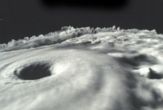
Hurricanes from Above
wilsonmandetlable1940.blogspot.com
Source: https://www.livescience.com/642-warmer-seas-creating-stronger-hurricanes-study-confirms.html
 hurricane to develop?)
Posting Komentar untuk "What ocean temperature will allow for a strong (stronger than a Category 3) hurricane to develop?"